by Deborah Hanyon, MPH, RDN, ACE-CHC | Jun 18, 2025 | Education Materials, Homeschooling
(Disclaimer: I received a FREE copy of this product through the HOMESCHOOL REVIEW CREW in exchange for my honest review. I was not required to write a positive review nor was I compensated in any other way).
(Post originally published in 2020) My son, who is 14, is on the autism spectrum. As a result, he struggles socially. Not only that, but he hates writing. So when I saw the Byron’s Games Connections Stationary Kit, I got excited over the possibilities. And it went even better than I expected!
To be perfectly honest, I knew my son would not be a happy camper over the idea of writing a letter. That’s why it is so cool that the Connections Stationary Kit has all of the neat accessories. I expected my son to give me a much harder time. However, that was not the case at all. And I know that part of the reason is that he was able to “cheat” a little.
For example, when he wrote the letters. Because the stationery papers have “Hello” at the top, he only had to write the name of the person. He wrote a total of five letters during the time I was doing the review. Now that’s a lot even for a typical kid!
There are several choices, including “Hello,” “Miss You,” “Explore,” “Thank You,” a big red heart, and a cool suitcase. Also included is a nice, black felt tip pen.
In addition, the Connections Stationary Kit contains a “Thank You” stamp, along with two choices of colors, blue and pink.
Obviously, all of the nice accessories make it much easier to sit down and write someone you know to let them know you care.
The Byron’s Games Connections Stationary Kit also includes plenty of envelopes and paper to make many friends and family feel special. The extras also take the pressure off kids who worry about making mistakes.
It was fun to see the progress Nathan made during the process as well. Below are some samples that illustrate what I mean.
The letters Nathan wrote were to the following people, and were written in the order the people are listed.
Grandpa
This was his first letter and he really had no idea what to do. He had never addressed a letter before and he didn’t even understand the concept of a stamp. In fact, he needed a full explanation of why we needed a stamp. This was especially important once he realized that we were delivering it to the apartment next door through the post office.
I didn’t get a picture of this. However, I can tell you that he told his grandpa about a truck he keeps seeing but hasn’t been able to photograph. My son was diagnosed with Autism when he was 13. So, he doesn’t really understand back and forth communication. But I liked that he talked about that because I know that his grandpa would appreciate it and know the “inside story.”
Grandma
The next letter was sent to grandma. His note to her was the temperature in Antarctica, which is crazy cold! (In case you’re curious, the current temperature is -44 degrees F, feels like -78 degrees F).
ABA (Applied Behavior Analysis) Therapist
His third letter was to his ABA Therapist and he wouldn’t let us see it. However, I know he didn’t use words.
His natural preference is to use pictures when he “writes.”
This is one of the reasons I chose Connections Stationary Kit project for him. I allowed him to do the pictures for this one. However, he obviously needs to use words when writing correspondence to most people.
Dad
I was especially pleased with the quick note he sent to his dad. I insisted that it be a “thank you” note. And this worked out well because of the “thank you” stamp. Also, having the “Hello” sticker helped reduce the number of words he had to use while writing. Below is a picture of his dad’s letter:
Mom
So, this would be me. These are all of Nathan’s favorite characters that he is always drawing. I’m not sure what exactly he is trying to say here. However, he did say “Thank You,” which I truly appreciate.
The next letter we want him to write is to a young friend he used to hang out with who moved far away. Nathan seemed particularly enthusiastic about this one. So, I will try to update you when he writes this letter!
In conclusion, if you have children who are struggling writers and/or struggle socially, I think the Byron’s Games Connections Stationary Kit will be the perfect thing for you to use to help develop these skills. Not only will this cool kit help develop skills but it will help more people to feel important.
To view all of the Homeschool Review Crew reviews click the image below.
by Deborah Hanyon, MPH, RDN, ACE-CHC | Apr 20, 2025 | Education Materials
(Disclaimer: I received a FREE copy of this product through the HOMESCHOOL REVIEW CREW in exchange for my honest review. I was not required to write a positive review nor was I compensated in any other way).
Today, I’m going to tell you a bit about an historical adventure my son and I have been reading for the past several weeks. It’s a book published by YWAM Publishing and is part of the “Heroes of History” series. We both read the book independently and then came together to discuss it.
The Publisher is YWAM Publishing. “YWAM” stands for “Youth with a Mission.”
Generally speaking, YWAM is an organization with a focus on missions, evangelism, and discipleship. Thus, their books are written primarily with this in mind. Since the person Daniel Boone did not to appear to be openly Christian, this book doesn’t have strong Christian themes. However, it is clean, wholesome, and is written as a story, even though it is based on true history.
Needless to say, Daniel Boone was an interesting character, particularly as an adult. For example, once the introductory themes were passed (birth, childhood, etc.), and Daniel started his wilderness adventures, especially as they apply to his contact with the Indians (Native Americans), it became quite suspenseful.
The subject and title of the book is “Daniel Boone – Frontiersman.”
You have probably heard of the name Daniel Boone. However, you may not realize that Daniel Boone was a real person and not just a tall tale. I now understand where the idea of Daniel Boone being a “Tall Tale” came from. The reason why is because of the way the first published book about him was written.
On October 22, 1784, Daniel’s 50th birthday, a book was published about his life thus far. The Title was, “The Discovery, Settlement and Present State of Kentucke..To which is added An Appendix, Containing the Adventures of Col. Daniel Boon,” by John Filson. Apparently, though most of the facts in Filson’s book were correct, it was written like an “epic myth.” So, people reading the book got the idea that Daniel Boone was the hero who had single-handedly opened up the west.
Obviously reality is often less exciting, though not always. It is true that Daniel Boone had his share of adventure. And it is also true that he was a strong leader and a courageous adventurer. But it is also sadly true that he experienced tremendous hardship and loss as did the settlers (and Indians) around him.
If you’ve read biographies and stories from 200 years ago, then you already know that people often died too soon.
Daniel and his wife lost all but one of their daughters, and at least two of their sons. Daniel also lost one of his brothers to Small Pox when he was still young. As a result, Daniel raised his nephew.
I’ve always been disturbed by the lackadaisical attitude that humans had towards animals in the Old West. And this book is no exception.
For example, at one point Daniel mentions that he killed 150 bears in one month for the bear grease. This was the way they survived, but I still find it unsettling. Daniel Boone also discusses the fact that some of his men couldn’t resist the temptation to use buffalos for target practice. They would often kill a buffalo for only the tongue or rump and then leave the rest to rot. As a result of this disgusting behavior, after living in one location for a month, they often had to travel for days to find a buffalo.
Reading about this stuff makes me steaming mad.
However, true history is reality. So, like it or not, it’s important to know it so that we can learn from it and hopefully not repeat it. This is why these books are so perfect for kids to read. They teach history in an interesting way, while sticking with the facts, whether good or bad.
YWAM Publishing provided us with supporting materials to go with our book as well. As a result,
I have also been giving my son assignments which came with the Daniel Boone book.
Below are a few examples of the work he did. My son is 14 and is on the Autism Spectrum. If you knew him, you would know that he is making great strides in his willingness to write down answers with an actual pencil. The final draft is neater and doesn’t have the pictures. Daniel Boone also isn’t all marked up.
Rough draft of one of my son’s assignments.
Rough draft of timeline. Note that I added the letters to make it easier to write the facts. Though the letters worked really well because they take up less space. My son worked on this Timeline for about a week. He processes very slowly, but he finished! 😀
These are words he was required to look up. I took the words out of the unit study given to me with the book. The page numbers were provided as well. He has done all of the words except the last five and has the definitions written in another Word document.
This the main area where Daniel Boone lived (the white area). I added a couple of the states (pencil) for context. He used blue pen to add the letters in white.
A major highlight of the “Heroes of History” book series is the supplementary material available to complement the books. The supplementary materials provide the teacher and/or parent with numerous ideas to use with students. These materials can be used with homeschooling kids as well as with kids in a classroom.
Another really cool thing is that YWAM Publishing published these awesome “Heroes of History” books but didn’t stop there. No!
YWAM Publishing has also published education resources, including outlines, suggestions, and curriculum to go with each of the books in the “Heroes of History” series.
Several style of full unit studies are provided. For example, homeschooling, classroom, and group overviews are provided. These are designed to be directive for any book in the series.
For example, “Using the Heroes of History” to teach US History, Language Arts, Social Studies, and Character Development. Pages of Tables are provided with theme ideas related to each individual book in the series.
These unit studies are excellent tools and will provide hours upon hours of assignment ideas.
In addition, I received a unit study focusing on Daniel Boone alone. This unit study includes numerous activities for every single chapter of the book. An excerpt will illustrate what to expect:
“It provides the schoolteacher and homeschooling parent with ways to use the book as a vehicle for teaching or reinforcing various
curriculum areas, including the following:
-
- History
- Geography
- Essay writing
- Creative writing
- Reading comprehension
- Public speaking
- Drama
- Art”
So, in addition to reading excellent books, your children can study the YWAM Publishing “Heroes of History” books in historical context.
Also, these materials can be used to fulfill language arts curriculum requirements. Also, history, social studies, and character development.
Like I mentioned above, YWAM Publishing has an entire collection of 72 “Heroes of History” books besides Daniel Boone. For example, Laura Ingalls Wilder, Harriet Tubman, Alan Shepherd, Ben Carson, Clara Barton, Louis Zamperini, and more!
YWAM Publishing also has another series titled, “Christian Heroes: Then and Now.” Thus, if you are interested in learning about famous Christians such as C.S. Lewis and Corrie Ten Boom, you need not look further.
And because these books are written for a younger audience, the stories are gentler, making them more appropriate for young kids. (Though it always a good idea to review a book before giving it to your child to read, especially if you have a sensitive child).
There are so many interesting “Heroes of History” books to choose from, I had a hard time choosing just one!
The reason I chose Daniel Boone is because I knew virtually nothing about him and because I thought my son would enjoy learning about him as well. I have a couple of YWAM Publishing books that I previously purchased before my son was born. I have been waiting for the right time for my son. After reading Daniel Boone, I am looking forward to reading the other two books we own. Since we now have the complementary unit studies, we’ll be able to do more than just read, which is just SO COOL!
Make sure you visit YWAM Publishing website to see the selection of “Heroes of History” books.
To see what the rest of the Homeschool Review Crew thinks about the “Heroes of History” and “Christian Heroes: Then and Now” series, click the image below.
by Deborah Hanyon, MPH, RDN, ACE-CHC | Mar 17, 2025 | Education Materials
(Disclaimer: I received a FREE copy of this product through the HOMESCHOOL REVIEW CREW in exchange for my honest review. I was not
required to write a positive review nor was I compensated in any other way).
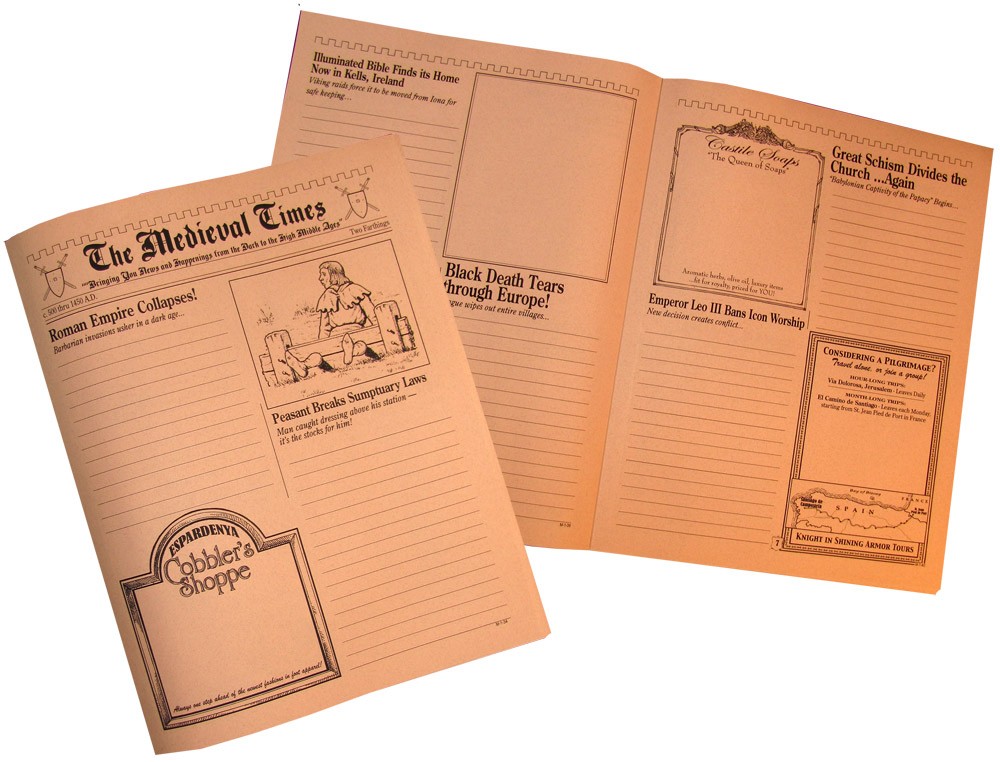
5 Exciting Ways to Travel to the Middle AgesMy son has always enjoyed hands-on activities. He continues to learn this way, and to have a much better attitude when I assign multi-sensory activities, despite that he is in 9th grade*. Though he likes history, he absolutely despises writing essays. Thus, the Home School in the Woods Project Passport World History Studies was a great match for us to study history.
This year we have dabbled in a few scattered activities for variety in our history studies. For example, we started out the school year reviewing the US Presidents. We also spent a couple of months studying Christian Martyrs from early AD years as well as a little bit of time focusing on geography. Despite these interesting projects, we were ready for something new and exciting. Especially since it was wintertime.
To give you a feel for what the theme is for the Project Passport World History Studies curriculum, I am inviting you to travel for a short time with me to get a taste of what you might get if you traveled to the Middle Ages. And if you and your children like the idea of traveling to another time and place, you can purchase the inexpensive curriculum yourself.
You can choose the Middle Ages or you can make another choice from the list available at the Home School in the Woods main website.*
Here we go! =)
5 Exciting Ways to Travel to the Middle Ages
1. Create Your Own Passport and luggage
As you can see from the photos below, that’s exactly what your kids will do when they begin “traveling” to the Middle Ages. They will first need to prepare by creating their passport and getting their luggage ready. This is a very challenging project, so be sure to read the directions very carefully as you go through these projects so you don’t make a mistake. We went through 3 folders before we got it right. But it was worth it! What a cool project this was. The time spent flew by and I didn’t get any complaints which is pretty common occurrance normally.
2. Dress up like a Serf, King, Knight, or Commoner (and learn about costumes and Middle Ages fashion trends)
Or if you’re short of time or resources, you can start with studies of some of the fashion trends. Your kids will have lots of opportunities to color. Interesting thing about coloring. When my son was younger, he hated coloring and would only scribble. Now he does an amazing job when I assign coloring projects. (Nathan colored the knight and horse below—he always has to add his take on everything)!
We are in the middle of a COVID-19 pandemic as I write this review. So, we’re kind of stuck at home. As a result, we couldn’t go out shopping at the local thrift store for cool fabrics and gadgets to use for dress up. However, my son dressed up his Knight (see below). Plus, we are currently working on puppets and will be doing a puppet show.
3. Create puppets and act out a skit
Not too many things can bring you to another time and place as quickly as acting out a play or skit such as a puppet show. All of the directions are included for this project. You simply have to plan ahead and make sure you have everything you need before you start, and I am sure that you and your kids will have a ton of fun with this project.
4. Cook a Middle Ages Feast (and Make Marzipan out of Clay)
No, but seriously! I know you are just dying to try out the Gruel and Blawmanger! Really, most of these foods are much tastier than they look. And you will definitely get a more authentic feel for the way dinnertime was experienced while working through this project.
5. Make an Old-Fashioned Middle Ages Newspaper and Write Stories Based on True History
Remember I mentioned that my son hates writing? Here’s the thing.
If I would have required him to write a summary of the history we studied, as opposed to allowing him to cut and paste the portions in the actual essay like you see in my example below, it would look like he didn’t have a clue.
But the fact is, this method that I use to help him get his ideas out on paper is a perfect example of how oftentimes our kids have a lot more knowledge in their head than what is showing up on paper. I find these kinds of projects amazingly encouraging and also I believe it encourages my son to know that he is smarter than he thinks.
If your child can pull sentences out of a two to three page essay, put them in the correct order, and create a summary, then you can be sure he or she understands what they have studied.
Lots of other activity choices are available in Home School in the Woods’ multi-sensory Middle Ages history and social studies curriculum. For example:
- Make a Tapistry
- Build a Castle
- Build a Catapult
- Learn about Iconoclasts
- Study the Geography of the Roman Empire before and after the fall of the West.
- Learn about the Barbarians and Attila the Hun
- Create a full Lap Book (see below two pictures for examples of the finished Lapbook. (This is only a sample, there’s much more)!
- And Much More
AND Check out this interesting and very timely post on Mt. St. Helen’s Eruption in 1980 from Amy at “Home School in the Woods” here.
*And with the 2020 Presidential election just a few months away, be sure to check out the super cool Lap-Pak: U.S. Elections! With the upcoming election in November 2020, this is the perfect time to provide your kids with a fun hands-on activity to help them understand and apply the facts of our political process.
Click here to check out this truly unique Lap-Pak from Home School in the Woods.
Make sure to read what the rest of the Homeschool Review Crew have to say about “Home School in the Woods” awesome products. Click the image below to visit.
*This is a re-published post originally written in March 2020.
by Deborah Hanyon, MPH, RDN, ACE-CHC | Jan 30, 2025 | Education Materials
Black Pioneers in Food Science and Technology
As teachers and homeschool moms, we strive to provide our students with inspiring role models in all disciplines of study. One area that both educators and students often overlook is Food Science and Technology – an area enriched by the contributions of many black pioneers in the past.
In Honor of Black History Month
From inventors and innovators to activists, scientists and entrepreneurs, black pioneers have shaped food science in a multitude of ways. For example, they advanced public health initiatives through technology and inspired cooks with their creativity. To honor their indispensable impact, let us turn now to discover some of the amazing black minds who revolutionized this field!
George Washington Carver
Carver was a major contributor to the field of food science and technology. He is best known for his work with peanuts, but he also made significant contributions to the fields of soybeans, sweet potatoes, and other crops. Carver developed new methods for processing and utilizing these crops, which helped to improve the diets of many Americans.
Leah Chase
Was an amazing woman and an important figure in food science and technology. She is best known for her work as a chef and restaurateur in New Orleans, where she helped to develop Creole cuisine. Chase’s restaurant, Dooky Chase’s, was a popular gathering place for both locals and tourists, and she was known for her use of fresh, local ingredients.
George Crum
Best known for inventing the potato chip, Crum was working as a chef in a Saratoga Springs resort when he was asked to make a dish that would be suitable for a customer with sensitive teeth. In order to meet this request, Crum sliced the potatoes very thin and fried them. The result was an instant success, and the potato chip has been a popular snack food ever since. (It is suggested that it was his sister who made the discovery).
Lloyd Augustus Hall
Another important black pioneer in food science and technology, Hall is best known for his work in the area of food preservation. Hall developed many new methods for preserving food, which helped to keep foods safe from spoilage and contamination. He also developed new packaging methods that helped to extend the shelf life of foods.
James Hemings
James is best known for his work as a chef at Thomas Jefferson’s Monticello estate. In fact, he was responsible for preparing many of the meals served at Jefferson’s home, and he is credited with introducing many new foods to Jefferson’s table, including ice cream and macaroni and cheese.
Joseph Lee
Lee was an innovative figure who contributed greatly to food science and technology. He is best known for his work in developing the first bread-making machine. Lee’s machine allowed bread to be made much more quickly and easily than it could be made by hand, which helped to revolutionize the baking industry.
Edna Lewis
is another significant figure in food history. She is best known for her work as a chef and author. Lewis wrote several cookbooks that featured recipes using fresh, local ingredients. She was also known for her advocacy of using seasonal produce in cooking.
Marie Maynard Daly
is another important pioneer in food science and technology. She is best known for her work in developing new methods of analyzing nutrients in foods. Daly’s work helped to improve the understanding of how diet affects health, and she also developed new methods of fortifying foods with vitamins and minerals.
Norbert Rillieux
Rillieux is best known for his work in developing the multiple-effect evaporator, which revolutionized the sugar industry. Rillieux’s evaporator allowed sugar to be produced much more efficiently than it had been previously. This helped to make sugar more affordable for consumers.
Alfred L. Cralle
is also a significant figure in food science and technology history. He is best known for inventing the ice cream scoop. Cralle’s invention made it possible to portion out ice cream much more easily than it could be done by hand. This helped to make ice cream a popular dessert item.
Malinda Russell
Malinda wrote and published the cookbook A Domestic Recipe Book: Containing Five Hundred Useful Recipes For All Kinds Of Plain And Rich Cake (1866). This cookbook was one of the first cookbooks written by an African American author, and it contained many innovative recipes that were ahead of their time.
Frederick McKinley Jones
Frederick influenced food science & technology in a significant way. He invented mechanical refrigeration units used specifically for transporting perishable goods such as fruit & dairy products over long distances. This greatly increased both quantity & quality control measures throughout American markets & supermarkets where these items were sold.
Want to know more? Want a project that you and your students are sure to LOVE?
by Deborah Hanyon, MPH, RDN, ACE-CHC | Sep 17, 2024 | Blog Posts, Education Materials
How To Motivate Yourself to Cook More at Home
With many restaurants now reopened, more people are dining out again. For example, a recent survey by Popmenu on US consumers found that 30% of all consumers spend an average of $180 per week on restaurant food, mainly for convenience. On the other hand, some people purchase from fast food restaurants for other reasons: to save money or because they don’t have time to cook.
While fast food saves people time and money, research shows that these outside meals don’t bode well for our health. A study by the Journal of the Academy of Nutrition and Dietetics found these meals ten to be higher in energy density, fat, and sodium, but low in protective nutrients like dietary fiber and antioxidants. This may increase the risk of chronic diseases like obesity and diabetes, potentially leading to early death.
In comparison, cooking at home opens up the opportunity to cook healthier and sometimes more cost-effective meals. However, some people may be discouraged by the time and effort needed for cooking, especially when a fully cooked meal is just a phone call away. To help you overcome these temptations, below are some strategies to motivate yourself to cook more at home:
Make Food you Enjoy
One common misconception about home cooking is that the food is bland and boring. But meals don’t have to be “healthy” all the time; you can get your motivation going by making food you enjoy. If you’re craving junk food, you can still enjoy its taste at home and make it healthier by swapping out ingredients and cooking methods. For instance, instead of buying salty French fries, you can coat sliced potatoes with olive oil and spices before cooking them in an air fryer— leaving your fries with a satisfying crunch without saturated fat or salt. In addition to being healthier, you can always modify recipes and suit your taste more, making the process more enjoyable.
Take Time-Saving Shortcuts
[IMAGE: https://www.weknowrice.com/wp-content/uploads/2022/01/12-Aroma-6-Cup-Pot-Style-Rice-Cooker.jpg] Credit to WeKnowRice.com
Investing in time-savvy tools like an oven or rice cooker is best for the utmost efficiency. The latter device can bulk cook rice, which serves as a good carb base for most dishes but can also cook other food. The Aroma 6-Cup Pot Style can double as a food steamer, allowing you to steam veggies, meat, or fish, simultaneously with rice, producing a meal in one quick cooking cycle. Another great device to have in the kitchen is a food processor, as it allows you to chop vegetables, mince meats, and even puree nuts or salsa quickly. The Cuisinart Custom 14-Cup food processor has a simple interface that makes it easy to use and performs well for a relatively lower price point.
[IMAGE: https://media.cnn.com/api/v1/images/stellar/prod/cuisinart-food-pc.jpg] Credit to CNN.com
Adjust your Expectations
If you’re not an experienced home cook, adjusting your expectations is essential. It can be tempting to compare your meals to those served in restaurants, but as food writer Ruth Reichl stated, not all food has to be picture-perfect. You also don’t have to immediately pressure yourself with complex recipes or try to cook something new daily. In addition, it helps to have go-to recipes that you love and is easy to make, as it opens up greater flexibility during a week when you may be less motivated to cook.
Make sure to visit our blog Homeschooling Dietitian Mom for more cooking tips and tricks!
Written by Reanne John for homeschoolingdietitianmom.com
Reanne John became a learning advocate after her daughter entered nursery. After discovering helpful educational tips, Reanne decided to pursue a career in blogging to support other parents.
Want help with cooking healthy meals while saving time? Click here to check out my Epicure store.
Other posts and products you might enjoy:
5 Tips to Make the Most of Your Outdoor Exercise Plan
27 Christmas Cooking Ideas for Kids
God Created Dinosaurs FREEBIE
by Deborah Hanyon, MPH, RDN, ACE-CHC | Jul 24, 2024 | Cooking Tips, Customizable Meal Plans, Education Materials, Food Allergies and Special Diets, Homeschooling, Nutrition and Health
In the bustling kitchen of a homeschooling family, amidst the flurry of flour, the sizzle of the stove, and the laughter of children, something magical happens. Cooking becomes more than just a means of sustenance; it becomes a gateway to learning, creativity, and spiritual nourishment. In Cooking Up Faith, we’ll explore a collection of delicious and nutritious recipes designed to delight the taste buds and feed the soul of your homeschooling family.
The Benefits of Cooking with Kids
Cooking together as a family isn’t just about putting food on the table; it’s an opportunity to cultivate lifelong skills, foster creativity, and strengthen bonds. From measuring ingredients to following recipes, children learn valuable math and reading skills in the kitchen. But perhaps more importantly, they learn about teamwork, patience, and the joy of sharing meals with loved ones. As Proverbs 22:6 reminds us, “Start children off on the way they should go, and even when they are old they will not turn from it.” By involving our children in the cooking process, we lay a foundation for a lifetime of healthy eating habits and family togetherness.
I have a free Kids Recipes Book to get you started, and a complete Food Safety and Baking Science bundle on Teachers Pay Teachers to get your kids excited and confident about being in the kitchen!
Easy and Healthy Recipes for Busy Homeschool Days
When the demands of homeschooling leave little time for elaborate meal preparation, simplicity is key. Explore a variety of family-friendly recipes that are not only delicious but also quick and easy to make in my Comfort Food Recipes Book as well as in my Quick And Easy Lunches eBook on Teachers Pay Teachers. From hearty soups and salads to one-pan wonders and slow cooker meals, these recipes are designed to fit seamlessly into your busy homeschooling routine. With wholesome ingredients and simple instructions, you can nourish your family’s bodies and spirits without sacrificing precious time or energy. To really save yourself some time and energy, I recommend a meal planner like Living Plate RX. It makes planning, prepping, and shopping a week of healthy meals – even for specific diets – a breeze.
Faith-Filled Kitchen Conversations
As you gather around the table to enjoy your delicious creations, let the conversation flow as freely as the food. Use mealtime as an opportunity to discuss faith, values, and life lessons with your children. Share stories from the Bible that relate to the ingredients or dishes you’re enjoying. A wonderful resource to get you started is my God Created bundle on Teachers Pay Teachers. Remember to ask open-ended questions that spark meaningful discussions about God’s provision, gratitude, and the importance of sharing with others. And above all, savor the moments of connection and camaraderie as you break bread together as a family.
Embrace the Power of Shared Meals
Cooking is so much more than just a chore; it’s a labor of love that nourishes both body and soul. As homeschooling families, we have the unique opportunity to turn our kitchens into classrooms, where lessons in math, science, and history are infused with the aroma of homemade goodness and the warmth of family togetherness.