by Deborah Hanyon, MPH, RDN, ACE-CHC | Dec 23, 2023 | Nutrition and Health
I've been getting a lot of questions about iron lately. So, I decided to address the question, “What interferes with Iron Absorption?”
Antacids and Ulcer Medications
The main reason these medications interfere with iron absorption is because they raise the pH of the stomach. The lower the number on the pH scale, the higher the acid content of your stomach. Your stomach contains hydrochloric acid, which aids the digestion process. Raising the pH of your stomach will impede the absorption of many nutrients, including iron.
This is why you and your doctor have to weigh the benefits and risks of taking or not taking antacids. It's good to be aware of this issue, however, so you can work towards making sure you are eating plenty of iron-rich foods.
Cholesterol Lowering Medications
Certain cholesterol lower medications, called bile sequestrants, interfere with iron absorption. Examples of this class include cholestyramine and colestipol.
Phytic Acid
Phytic acid is an antioxidant compound found in the bran of grain and in seeds. It is the main storage form of phosphorus (an essential mineral) in plants. Phytic acid is a strong chelator of calcium, zinc, and iron. Chelators are what are used to remove excess iron when a person has too much iron in their blood. Thus, the reason phytic acid decreases absorption of iron. Again, this is a good thing to be aware of. However, this does not mean you should avoid foods high in phytic acid, because foods high in phytic acid are usually high in other important nutrients as well. Examples of high phytic acid foods are spinach and other greens, soybeans, whole grains, seeds, and dark chocolate.
Mega Doses of Vitamins and Minerals Interfere with Iron Absorption
Taking excessive amounts of vitamins and minerals interferes with iron absorption, and other nutrients as well. When studies show certain nutrients to be protective against disease, people often think they should take a supplement. The supplement industry is a multi-billion-dollar industry. And their goal is to convince people they “need” a certain supplement in order to be healthy.
The problems with this are multiple. First, of all, when studies are done, the scientists don't always know whether it is the nutrient ONLY or whether there is something else in the food studied that is contributing to the apparent protective effect of the vitamin. Not only that, but antioxidants, such as vitamin A and vitamin C, can become pro-oxidants when taken at too high of doses. When a vitamin becomes pro-oxidative, this makes it harmful to the body.
Also, taking excess amounts of vitamins will interfere with the absorption of other essential nutrients including iron, zinc, copper, and others.
This is why it is ideal for you to get your nutrients from the food itself.
Now that we've discussed what interferes with iron absorption, let's discuss how to increase iron absorption.
- Heme iron sources

Bobotie with tomato sauce
- Add vitamin C.
- Combination foods such as
- Chili, spaghetti and meat sauce
- Tacos with salsa
- Bazeen-barley dough with tomato sauce (Libya)
- Bobotie with tomato sauce (South Africa)
- Tomato chutney served with meat or whole grain/enriched bread
- Scrambled eggs with sautéed tomatoes (Chinese)
- Tomato curry with fish (India),
- Chicken with tomato sauce (Malaysia)
- Drink Orange juice or tomato juice with high iron foods
Other articles to read:
To Review the difference between heme and non-heme iron, click here.
Normal Iron Levels
Diet and ADHD in Children, Part 1
3 Superfoods that are Truly Healthy
5 Reasons why You Need Folate
6 Reasons You Need More Fruit in Your Diet
Does Food Affect Autism?
References:
https://www.livestrong.com/article/484289-medications-that-inhibit-iron-absorption/
https://www.medicinenet.com/drug_interactions_of_foods_herbs/article.htm
by Deborah Hanyon, MPH, RDN, ACE-CHC | Aug 7, 2023 | Food Allergies and Special Diets
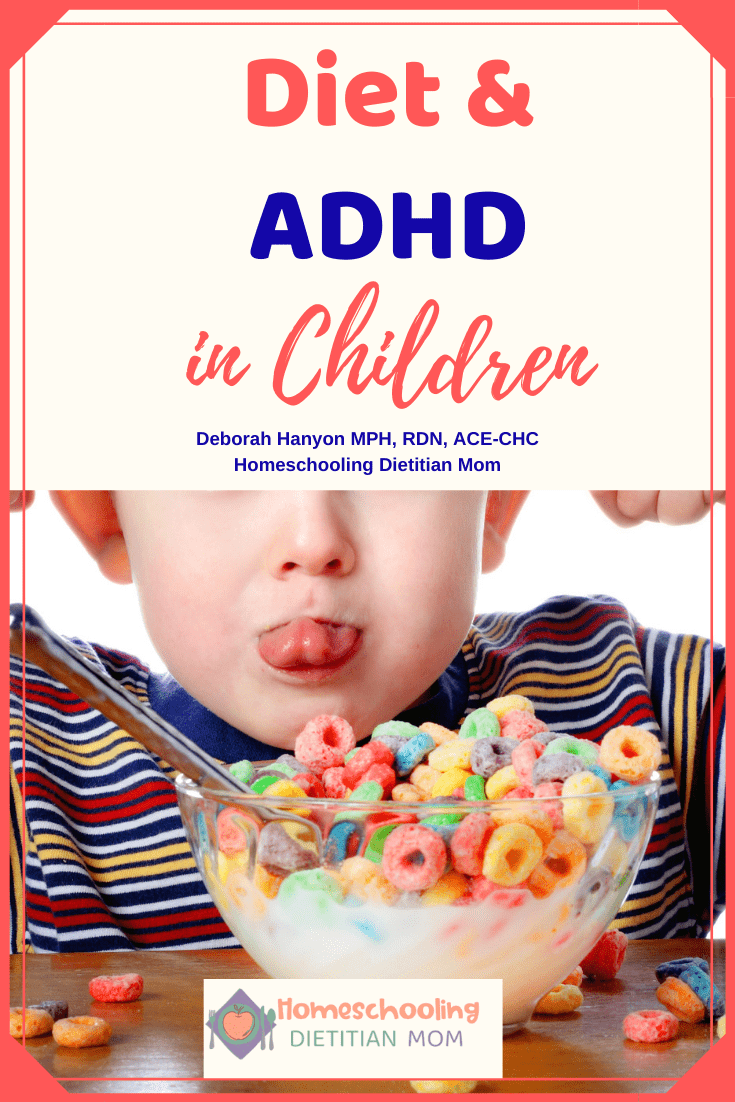
ADHD and Diet in Children – Part 1. My son was diagnosed with ADHD in Kindergarten. I was a Registered Dietitian back then and had been since 2000. However, I admit all I was thinking about back then was keeping his diet balanced. This included ensuring he received enough protein, iron and other essential vitamins and minerals through the foods he ate. I never thought about diet and ADHD in children.
I never seriously thought about food additives to avoid or specifically, “Diet and ADHD in children,” until recently.
Nathan was pickier when he was younger, and he was thin. So, in addition to giving him a multivitamin with iron, I gave him one bottle of Pediasure every day. I also gave him 1000 IU of Vitamin D (and still do) every day. (I take 6,000 IU per day. We use Seeking Health D3 drops).
I started giving Nathan vitamin D after I was diagnosed with vitamin D deficiency. My doctor prescribed a high dose of vitamin D (10,000 IU per day) to counteract the deficiency. The vitamin therapy had amazing effects on my mood–within 3 days I felt better. I was ready to start selling vitamin D, I was so impressed. I've struggled with depression in the past, so this was a HUGE deal!
I also noticed that as I continued to take it, I got sick with the cold much less often. To this day, if I get a cold, it's milder and it doesn't last as long. This is the same with my son.
More people are realizing that vitamin D is essential for much more than strong bones.
It treats and prevents depression, increases your immune system, and is even helpful for diabetes. However, not everyone is on the bandwagon.
The standard 400 IU is not enough to prevent deficiency in most people, but this is the most common amount on multivitamin labels. In fact, this is still another vitamin that many people are deficient in, and most aren't even aware of it. (See my articles on Zinc Deficiency and Magnesium Deficiency for two other examples).
The research is still catching up on how important vitamin D is for good health. However, the vitamin D council has the latest, and the most accurate information regarding vitamin D. (Vitamin D is not actually a vitamin. It's a hormone and is part of the endocrine system). Click here for my article about foods high in Vitamin D.
What about Additives to Avoid?
Okay, so I was satisfied with the fact that Nathan was getting all the most important nutrients through his diet and/or through the supplements I was giving him. One thing I didn't think about back then, however, was whether there were food additives in his diet that could be contributing to his symptoms. I never asked the question, “Do certain foods or ingredients affect kids with ADHD?”
New Discovery of the Importance of Diet and Children with ADHD
I didn't start thinking about food additives until Nathan was seven, because I was overwhelmed with all his other issues. And let's face it. Most doctors don't emphasize food or nutrition as potential therapy for special kids such as ours. My son's doctor certainly didn't.
As a Registered Dietitian Nutritionist, we are required to complete a certain number of continuing education units. So, when it was time to search for that perfect continuing education class, I came across an awesome book titled, “Eating for Autism,” by Elizabeth Strickland. When I read this book, the lights started coming on. And I immediately made changes to further improve Nathan's health.
For example, I immediately put Nathan on a high-quality Omega-3 supplement. (I will talk more later about why quality is so important and how to know you are getting the best quality). I also changed his multivitamin so that it did not contain any artificial flavors or colors. Previously he was taking Flintstones chewable vitamins, which were prescribed by his pediatrician. He wasn't taking omega-3s at all before this.
I want to point out a few things that I believe are important to know about children's multivitamins.
When Nathan's pediatrician first prescribed multivitamins, I had to tell the pharmacist I wanted iron in the vitamin, because the doctor ordered them without iron. The doctor was worried about the supplement causing constipation. However, a multivitamin with iron only contains 100% of the US RDA and shouldn't cause constipation (be sure to check with your doctor before making changes like this). Normally, iron causes constipation when taken as a single mineral supplement because it is a larger amount. NOTE: I do not recommend iron supplements without a doctor's order because of the risk of toxicity.
A separate iron supplement should only be necessary if your child is diagnosed with iron-deficiency anemia (low iron in the blood). This requires a simple blood test. At that point, the risks of constipation outweigh the risks of iron-deficiency anemia.
Cow's Milk and Iron Deficiency
I previously worked for the Women, Infant, and Children program as a Public Health Nutritionist. While there, I discovered that iron deficiency is common. I also completed my master's degree project on Iron Deficiency Anemia and its connection to excessive cow's milk intake. So, this issue is close to heart.
For those interested, the results of the study showed that children who stay on the bottle longer than 12 months are at increased risk of iron deficiency anemia.
This is because:
- Cow's milk has no iron, and in fact too much cow's milk can interfere with iron absorption (affect the ability of your child to use the iron from other foods)
- Drinking from a bottle usually means drinking substantial amounts of milk. Whole milk is high in calories*, and so will fill the child up and make him less interested in other foods (such as iron rich foods).
So, prevention of iron deficiency was important to me before Nathan was even born.
This is because Iron deficiency is serious and should not be taken lightly.
Iron deficiency anemia results in developmental delays, (and can even cause permanent mental retardation, if it's severe enough, and doesn't get treated). Iron deficiency also results in increased risk of infection, fatigue, and a whole slew of other issues. Prevention is the best treatment. The good news is that most doctors test for iron deficiency early on. If your child has not been tested. I strongly encourage you to get him or her tested.
It is important to note that if there is no deficiency of iron, and your doctor has not ordered an iron supplement to treat the deficiency, a simple multivitamin with iron should prevent iron deficiency anemia, even if the diet is inadequate in iron.
I gave Nathan the Flintstones vitamins with iron for several years. They were free through his insurance. Once I started learning more about the risks of artificial colors and their effects on kids with ADHD and autism, I started giving him vitamins that don't contain artificial additives. I paid for these myself, which was worth it to me. Although to be fair to the doctor, she might have been willing to prescribe the healthier ones, I just never asked.
It's important to know that gummy vitamins do not contain iron.
It can be hard to get your kid to chew healthier multivitamins. This is something I started having problems with. Nathan got to a point where he wouldn't take the chewable vitamins. Of course, he liked the gummy vitamins. However, I knew he needed iron to prevent anemia, because he wasn't eating much meat at all (or meat alternatives, such as eggs, beans, peas, nuts, seeds). So, I searched high and low for gummy vitamins that contained iron. I could not find one with iron!
So, if you want your child to get iron in his multivitamin, you'll need to find another type than gummies.
(If you know of a gummy vitamin with iron, please let me know)!
So, back to the first step to healing. I didn't necessarily do the steps in order (nor did I even do all the steps. For example, I see no evidence that Nathan is gluten or casein intolerant). However, I'm going to try to talk about them in order–sort of.
Anyone who knows me knows that I tend to jump around from topic to topic when I'm talking. Since I am writing to you, that shouldn't be too much of a problem!
First, like I discussed above, make sure your child is getting his or her basic nutritional needs met. You can do this by:
- Completing a 3-day diary of everything your child eats. (Click here for a basic 3-day food record–it's free–that I whipped up). Make it as detailed as possible, including serving sizes, brand names, time of day eaten, how much actually eaten, how much your child likes the food. Remember it's only 3 days! 🙂
- Try not to make any changes or improvements during this 3-day period. Don't judge yourself or your child. No one has to see this except you.
- Use MyFitnessPal.com or some other calorie/nutrient calculator to help. MyFitnessPal.com will make it much easier to see any major deficiencies (or excesses) in intake off the top.
- For example, proteins, carbohydrates (simple, complex, fiber), fats (saturated, mono and poly, trans), cholesterol
- Vitamins A, C, sodium, potassium
- This is a good starting point.
After you've done a 3-day diary for your children (and yourself, if you're feeling brave :D), The next is to recognize, and then to avoid (or minimize) synthetic (artificial) food additives that are detrimental to his or her (and your) health.
I was going to cover both parts in this post, but I realize this post is getting too long already. high-quality Omega-3 supplement. In the meantime, there's a bit of information in my post, “Artificial Additives and our Kid's Health.”
So, in summary, record and review your children's and your (whole family's?) diets. Look for glaring deficiencies. Think about adding a multivitamin with iron (if not already taken) to your child's diet. Talk to your doctor about having your child tested for iron and/or vitamin D deficiency if you feel it's a problem.
Ask your doctor to test for:
- Vitamin D deficiency. – or you can test at-home using a high-quality Vitamin D supplement. The cost of a Vitamin D kit is around $50. This may be cheaper than going to the doctor. However, either way, you should
Check with your doctor before putting your kids on a high dose vitamin D supplement.
- Iron Deficiency – If the test hasn't been done recently and you are concerned about protein/iron intake.
Here is a basic 3-day Food Record Template, with a couple of pages for note taking.
Click here for a free handout of food combinations that increase absorption of Iron. Hint: Combining iron rich foods and vitamin C rich foods is the key. Click here for recipes and articles on iron rich foods.
In case you don't already know this. Adobe Reader is free and allows you to type into the document. When you click “Fill and Sign,” it allows you to type on the lines. This is something I just recently discovered.
Take care until next time! 🙂
Seven Surprising Symptoms of Iron Deficiency
Recipes High in Iron and Vitamin C
Why Are Kids Picky Eaters?
3 Superfoods that are Truly Healthy
Foods High in Folate and B6
The Benefits of Iron in the Body (eBook)
Cow's Milk Allergy or Lactose Intolerance?