Not only is dark chocolate a tasty treat, but it is a nutritional powerhouse. The benefits of dark chocolate are becoming well known, but just in case you haven’t heard the good news or would like a reminder. Here is a quick summary.
Benefits of Dark Chocolate
First, let’s summarize the specific nutrients provided to your body through a delicious bar of dark chocolate:
One 3-ounce bar of dark chocolate with 70–85% cocoa contains:
11 grams of fiber
67% of the RDA for iron
58% of the RDA for magnesium
89% of the RDA for copper
98% of the RDA for manganese
Potassium
Phosphorus
Zinc
Selenium
Since a full-size dark chocolate candy bar has about 600 calories, you might want to break this up into thirds. Which would provide 200 calories and about:
3 grams of fiber
22% of RDA for iron
19% of RDA for magnesium
Almost 1/3 of your RDA for copper
1/4 of your RDA for manganese
And still contains potassium, phosphorus, zinc, and selenium
Dark Chocolate Contains Fiber
Now what do these nutrients do for you? Well, for starters, fiber is important for healthy digestion and a healthy gut. Most people aren’t getting enough fiber. Intake of at least 25 grams of fiber for a woman leads to decreased risk of colon cancer, for example.
Dark Chocolate is a source of iron, magnesium, and potassium.
Iron is extremely important for healthy blood. Iron is part of the hemoglobin molecule which makes up your red blood cells. It is the hemoglobin molecule that enables your blood to carry sufficient oxygen and helps you maintain your energy level. For more on iron, click here.
Potassium is found in all fruits and vegetables, and anything that grows in the ground or on a tree, including nuts, seeds, coffee, tea, and chocolate!
Source of Plant-Based Saturated Fat
Dark Chocolate is high in saturated fat. However, it is plant-based saturated fat, which is much better for you. Besides, the recommended amount of saturated fat per day is 7-10% of total calories. Thus, saturated fat is an important part of a healthy, balanced diet.
In addition, because dark chocolate is plant-based, it does not contain cholesterol. Consumption of chocolate has been shown to lower LDL (bad cholesterol) and increase HDL (good cholesterol).
Dark Chocolate is a Source of Antioxidants and Phytonutrients
Speaking of plant based. Plants are rich sources of antioxidants and phytonutrients, and chocolate is no exception. In fact, dark chocolate is one of the richest antioxidant foods around.
Okay, so, let’s get real. No matter how healthy we want to eat, no matter how much we want our kids to eat the perfect diet, no matter how much we want to avoid processed food, real life exhausts us sometimes.
Even the natural born chefs among us don’t always feel like cooking.
And even the most frugal among us end up eating out eventually. Not only that, but like I mentioned in my last post on fast food, we don’t just eat out for the food. We eat out to be social, to relax, to feel closer to our loved ones and our friends.
So, what do we do when we find ourselves in the “forbidden” restaurant? Sip on a lemon water? Pretend we’re not hungry?
No! We choose healthy or we balance what we eat the rest of the day with what we eat at the restaurant.
Firstly, lets talk about balancing what we eat the rest of the day with what we eat at the restaurant.
When my family decides to eat out, we often eat at Sweet Tomato (Soupplantation). This is because (I’m laughing) Sweet Tomato is our son’s favorite restaurant. Why? Because he likes the macaroni and cheese! I have to twist his arm to get him to eat a tablespoon of shredded carrots or a slice of cucumber with his macaroni and cheese, but he does drink apple juice (that is actually his preference).
Even at Sweet Tomato, the calories add up fast. I generally will eat some of the green salads and my favorite Broccoli Madness as well as a tad of Tuna Tarragon pasta salad. And the herb focaccia is fabulous! I like to try out the monthly soups, though there are a few classic favorites like cream of mushroom, chicken noodle that are my mainstays.
MyFitnessPal has most of the menu items from Sweet Tomato in their database, so I can estimate my calories eaten. Usually, when I eat there, it ends up being around 700 calories. This is over half of my calorie allowance when I don’t work out.
When I eat at Sweet Tomato (or any other restaurant), I try to make sure I go to the gym and workout.
This increases my calorie allowance by an extra 300-500 calories. Also, at Sweet Tomato, the salads and soups have calorie and fat information next to the food. So you can estimate as you go, if you’re into doing that.
So what else can we do when eat out to make sure we don’t completely blow our diet?
Here are 10 healthy choices when eating out I have found to be helpful when eating out.
Check the nutrition facts information on the restaurant’s website. Restaurants are required to make nutrition and allergy information available to customers. 99.9% of restaurants nowadays have websites that you can access anywhere, including your mobile device.
Choose the lower calorie option. For example, if you’re at McDonalds, and you’re itching for a hamburger, buy the smaller hamburger. You can also ask for no sauce. For example, with the Big Mac, you can save 90 calories by ordering it without the sauce.
If you must have the high calorie option, eat half at the restaurant and save the other half for later.
Order just the sandwich and a salad instead of French fries OR order just a salad.
Pay special attention to calories in salads, however. Salads sometimes have more calories than a large cheeseburger, depending on what’s on them.
Use low calorie salad dressing or limit the amount of regular dressing you put on your salad.
Order the sandwich without cheese.
Drink water instead of soda.
Remember that just because it’s healthy doesn’t mean it’s lower in calories. For example, the Green Burrito Bean, Rice and Cheese burrito has more calories than a Carl’s Famous Star with Cheese (Green Burrito and Carl’s Jr exist together at many restaurants, in case you didn’t know that).
What attracts kids to Fast Food? I recently received an email from a subscriber. She wanted advice regarding her 17-year-old son. Her son was raised on a healthy diet since birth, but now only wants to eat at fast food restaurants. This is a concern that I believe many parents have as their kids hit the teen years.
So, what is going on here? Why do teens often prefer to eat at fast food restaurants to eating at home? Is it just about the food? Or is there something else going on that causes so many kids to want to eat more fast food as they get older? In other words, what attracts kids to fast food?
Teens are Exerting their Independence
One of the things about teens is that they are exerting their independence. They want to call the shots. One way they can do that is by taking charge of their own food intake. When they go out and eat at a restaurant, mom and dad don’t have to be there. So, the teen can eat whatever he or she wants. Plus teens usually like being around friends, so eating out becomes an opportunity for social interaction. They could bring their friends home, but that wouldn’t be the same because mom or dad would be there too.
So What Attracts Kids to Fast Food?
I read a book years ago titled, “Fast Food Nation.” It was an excellent book that discussed the psychology behind eating at a fast food restaurant. For example, the author, Eric Schlosser, discusses how eating at McDonald’s is an “experience.” People don’t go to McDonald’s simply because the food is so amazing. They go to McDonald’s because McDonald’s is effective in creating a positive image of themselves as a “Trusted Friend.”
Not only that, Schlosser writes,
“Over the last three decades, fast food has infiltrated every nook and cranny of American Society…Americans now spend more money on fast food than on higher education, personal computers, computer software, or new cars. They spend more on fast food than on movies, books, magazines, newspapers, videos, and recorded music–combined…
“The whole experience of buying fast food has become so routine, so thoroughly unexceptional and mundane, that it is now taken for granted, like brushing your teeth or stopping for a red light. It has become a social custom as American as a small, rectangular, hand-held, frozen, and reheated apple pie.” (emphasis mine).
In other words, kids are growing up in a culture where eating at fast food restaurants is promoted as part of what you’re supposed to do if you’re an American.
In another book, “Consuming Kids,” the author Susan Linn is helpful making the reader more aware of how much money and effort fast food manufacturers spend to make their products attractive to kids. For example, McDonald’s spent $1.3 billion in advertising in 2002 in the US alone. PepsiCo spent more than $1.1 billion. I’m sure it’s much higher today.
So, we can come up with recipes and find healthier “fast food” alternatives that fit in with our busy schedule. And I’m sure this will help encourage our kids to eat healthier at least some of the time. However, we should remember that no matter how good the food is at home, our kids will probably want to eat out more as they get older, especially if they have a lot of friends.
Healthy Fast-Food Picks for Kids
So, what can you do to tempt your child to eat more at home so that you can be sure she is getting the nutrients she needs?
If your teen likes hamburgers, you can serve hamburgers at home.
A hamburger served at home with lean beef or turkey is definitely healthier than a fast food hamburger. Especially since you can use a whole grain roll and offer healthy side dishes, including homemade French fries (see below for recipe). And if making a hamburger from scratch is a burden to you time-wise. There are pre-made burgers available that are definitely more healthy than a Burger King burger is. We shop at Costco, and they have delicious chicken burgers that you can buy and pop in the microwave, pan or BBQ grill for a quick burger. That could help with the time factor.
If your teen likes to eat chicken at fast food restaurants, like KFC, there are alternatives for that too. Again I mention Costco, because they have the best rotisserie chickens! Costco actually loses money when they sell their chickens for $3.99 (not a typo). I have done my research. Costco’s chickens are raised humanely and are free-range, plus they have no added hormones or other junk.
We are a family of three, and one chicken lasts several days. My husband and son like dark meat, and I like white meat. So, we always have extra white meat to use on sandwiches, chicken rice soup, or chicken tomato tacos and burritos.
If you don’t have a Costco nearby or aren’t a member, you can also get Rotisserie chickens at the grocery store. We sometimes get chickens at our regular grocery store, but they aren’t quite as good or as inexpensive. It’s still an option, however. If you are concerned about the ingredients, ask the deli manager about the food prep process.
The chicken nuggets recipe calls for frying the chicken. However, because you are making it at home, you don’t have to worry about the artificial additives used in fast food restaurants. Also, the sodium will be a fraction of the amount of sodium you will get in a restaurant. For example, in our recipe, there is only 91 mg of sodium per serving. In contrast, a four piece order of McDonald’s chicken nuggets contain 340 mg sodium, not to mention a long list of questionable ingredients.
When we made the chicken nuggets the first time, I felt guilty afterward because we fried them and could have baked them. However, my son loved the fried version, but may not have liked the baked ones because they would have been drier.
What Attracts Kids to Fast Food? It’s All About Balance
Like I’ve said in previous posts, homemade will almost always be healthier than processed. Just make sure you use canola, corn, or other unsaturated oil.
Speaking of the oil you use. Years ago, McDonald’s and other fast food restaurants used beef tallow to fry their French fries. Now they use whatever is acceptable at the moment because they don’t want to lose customers. A little trivia for you! 🙂
As an alternative to fast food french fries, homemade fried or baked fries made from fresh potatoes would count as a vegetable. Because french fries are technically a vegetable. The main problem with French fries from a fast food restaurant is that the potatoes aren’t fresh, so the vitamin C is long gone. However, fresh potatoes made at home are high in vitamin C, and the skin is high in iron and fiber. See below for homemade French fries recipe.
A Few Other Ideas
Does your teen like to cook? Maybe he can help with the prep.
It’s obviously a lot more work to make homemade burgers and fries than it is just picking up a burger and fries at your local fast food restaurant. However, if your teen likes cooking, or has elective requirements to meet for high school graduation, you can use this as a teaching and family bonding opportunity.
Does your son or daughter have a favorite vegetable they will eat? One that others in the family like as well? Buying already cut up fresh or frozen is one way to save time. I don’t recommend canned because canned vegetables are filled with sodium. But frozen is almost as healthy as fresh. Plus it has a longer shelf life, so you can stock up for when you are in a hurry or are too tired to cut up vegetables.
Does your teen sometimes grab a burger and bring it home to eat? If he brings a hamburger or something else home with him, you can encourage him to eat a salad or other favorite vegetable with it. There’s also fruit! Making his favorite vegetables and fruits readily available for him to eat can also help to balance the fast-food habit.
The good news is that there are healthy choices at most restaurants. If your teen eats out a lot but tries to order the healthier choices, praise her for it. If not, you can point her to the restaurant food site for nutritional facts to help with making the best decisions.
I’m a Registered Dietitian and I make use of restaurant websites to help me control my calories when I plan to eat out.
Because of government regulations, all restaurants are required to make the nutrition facts available on their menu items.
Hopefully, these tips will help relieve some of the anxiety you have about your teen’s growing independence, attraction to fast food, and other not so healthy food choices.
If you have any other questions, feel free to comment on this post or send me an email. I’d love to hear from you!
For further reading, my own articles on this site:
Not low fat, but still delicious and made from fresh potatoes which are high in Vitamin C and potassium. If you keep the skin on, you also increase the fiber and iron.
Prep Time10 minutesmins
Cook Time15 minutesmins
Total Time25 minutesmins
Course: Side Dish
Cuisine: American
Keyword: frugal, kid friendly recipes
Servings: 4Servings
Calories: 292kcal
Author: Deborah Hanyon, MPH, RDN, ACE-CHC
Ingredients
1CupAvocado oilAmount will depend on size of pan, amount of potatoes made
4LargePotatoesOne potato per person; Russett are best; wash and scrub thoroughly
1tspGarlic SaltLawry's is the one we use because it doesn't have any artificial ingredients
Instructions
Add oil to large non-stick pan
Heat to 375 degrees Fahrenheit
While oil is heating, cut potatoes into wedges. Cut potato in 1/2, and then in 1/2 again, and then 1/2 until wedges are about 3/8' square size.
When oil is ready, add potatoes carefully to pan using a pair of tongs
Cook potatoes until golden brown, about 15 minutes.
Drain on a paper towel covered plate for at least five minutes. Pat french fries with paper towels to remove excess oil.
In 2016, The United Nations declared Pulses as Superfoods. Four years later, they are still as healthy as ever. And they are also delicious, inexpensive, and easy to cook with.
If you’re wondering what a pulse is, and you are also wondering what constitutes a “superfood,” then you’ve come to the right place.
First of all, a definition. Pulses are the edible seeds of plants in the legume family.
For example,
lentils
green peas
split peas
chickpeas (garbanzos)
Are all pulses.
Also, dried beans including
kidney beans
pintos
and black beans
Are pulses as well.
To put it simply, pulses are legumes (beans and peas), and they are highly nutritious.
Pulses as Superfoods
Why are pulses classified as superfoods? There are at least 10 reasons:
High in Protein, Folate, Iron, Magnesium, and B vitamins
High in Fiber
Easy to Cook With
Promote Sustainable Agriculture
Decrease Greenhouse Gases
Increase Soil Health
Require Less Water than Other Crops
Help with Weight Management
Reduce Cardiovascular Disease and Cancer Risk
Help to Increase Food Security
And pulses are delicious when prepared correctly. Because of their mild taste, they can be integrated into many dishes, even desserts.
Other Articles you Might Enjoy from Homeschooling Dietitian Mom
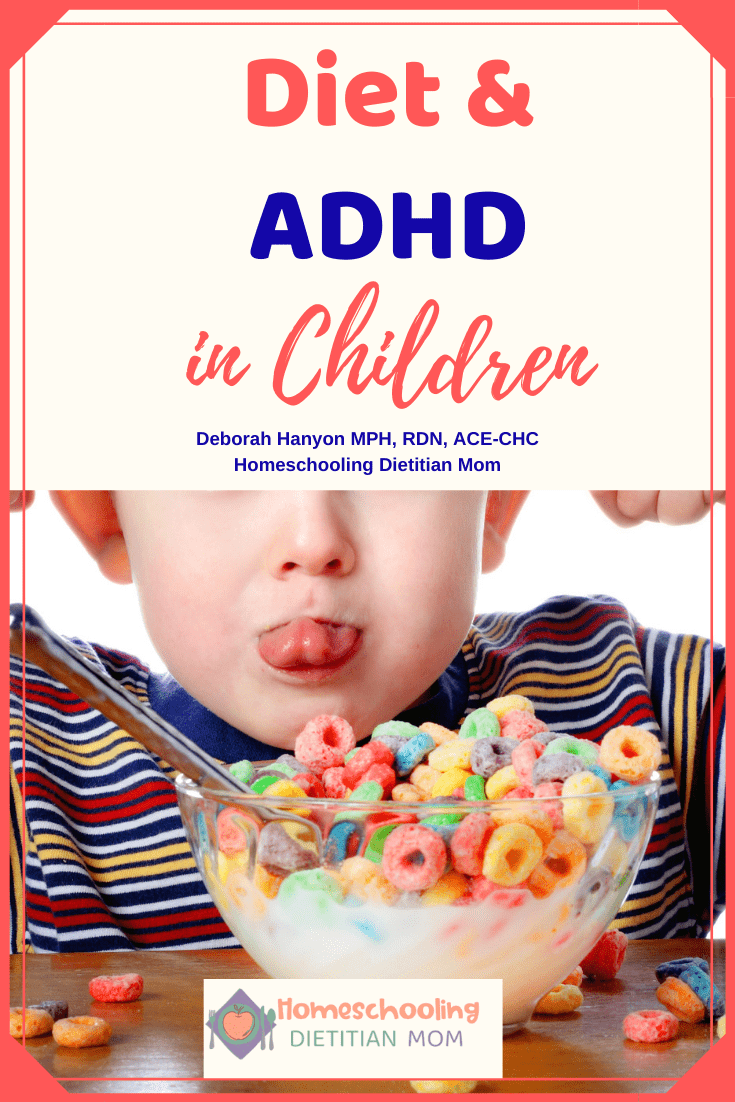
ADHD and Diet in Children – Part 1. My son was diagnosed with ADHD in Kindergarten. I was a Registered Dietitian back then and had been since 2000. However, I admit all I was thinking about back then was keeping his diet balanced. This included ensuring he received enough protein, iron and other essential vitamins and minerals through the foods he ate. I never thought about diet and ADHD in children.
I never seriously thought about food additives to avoid or specifically, “Diet and ADHD in children,” until recently.
Nathan was pickier when he was younger, and he was thin. So, in addition to giving him a multivitamin with iron, I gave him one bottle of Pediasure every day. I also gave him 1000 IU of Vitamin D (and still do) every day. (I take 6,000 IU per day. We use Seeking Health D3 drops).
I started giving Nathan vitamin D after I was diagnosed with vitamin D deficiency. My doctor prescribed a high dose of vitamin D (10,000 IU per day) to counteract the deficiency. The vitamin therapy had amazing effects on my mood–within 3 days I felt better. I was ready to start selling vitamin D, I was so impressed. I’ve struggled with depression in the past, so this was a HUGE deal!
I also noticed that as I continued to take it, I got sick with the cold much less often. To this day, if I get a cold, it’s milder and it doesn’t last as long. This is the same with my son.
More people are realizing that vitamin D is essential for much more than strong bones.
It treats and prevents depression, increases your immune system, and is even helpful for diabetes. However, not everyone is on the bandwagon.
The standard 400 IU is not enough to prevent deficiency in most people, but this is the most common amount on multivitamin labels. In fact, this is still another vitamin that many people are deficient in, and most aren’t even aware of it. (See my articles on Zinc Deficiency and Magnesium Deficiency for two other examples).
The research is still catching up on how important vitamin D is for good health. However, the vitamin D council has the latest, and the most accurate information regarding vitamin D. (Vitamin D is not actually a vitamin. It’s a hormone and is part of the endocrine system). Click here for my article about foods high in Vitamin D.
What about Additives to Avoid?
Okay, so I was satisfied with the fact that Nathan was getting all the most important nutrients through his diet and/or through the supplements I was giving him. One thing I didn’t think about back then, however, was whether there were food additives in his diet that could be contributing to his symptoms. I never asked the question, “Do certain foods or ingredients affect kids with ADHD?”
New Discovery of the Importance of Diet and Children with ADHD
I didn’t start thinking about food additives until Nathan was seven, because I was overwhelmed with all his other issues. And let’s face it. Most doctors don’t emphasize food or nutrition as potential therapy for special kids such as ours. My son’s doctor certainly didn’t.
As a Registered Dietitian Nutritionist, we are required to complete a certain number of continuing education units. So, when it was time to search for that perfect continuing education class, I came across an awesome book titled, “Eating for Autism,” by Elizabeth Strickland. When I read this book, the lights started coming on. And I immediately made changes to further improve Nathan’s health.
For example, I immediately put Nathan on a high-quality Omega-3 supplement. (I will talk more later about why quality is so important and how to know you are getting the best quality). I also changed his multivitamin so that it did not contain any artificial flavors or colors. Previously he was taking Flintstones chewable vitamins, which were prescribed by his pediatrician. He wasn’t taking omega-3s at all before this.
I want to point out a few things that I believe are important to know about children’s multivitamins.
When Nathan’s pediatrician first prescribed multivitamins, I had to tell the pharmacist I wanted iron in the vitamin, because the doctor ordered them without iron. The doctor was worried about the supplement causing constipation. However, a multivitamin with iron only contains 100% of the US RDA and shouldn’t cause constipation (be sure to check with your doctor before making changes like this). Normally, iron causes constipation when taken as a single mineral supplement because it is a larger amount. NOTE: I do not recommend iron supplements without a doctor’s order because of the risk of toxicity.
A separate iron supplement should only be necessary if your child is diagnosed with iron-deficiency anemia (low iron in the blood). This requires a simple blood test. At that point, the risks of constipation outweigh the risks of iron-deficiency anemia.
Cow’s Milk and Iron Deficiency
I previously worked for the Women, Infant, and Children program as a Public Health Nutritionist. While there, I discovered that iron deficiency is common. I also completed my master’s degree project on Iron Deficiency Anemia and its connection to excessive cow’s milk intake. So, this issue is close to heart.
For those interested, the results of the study showed that children who stay on the bottle longer than 12 months are at increased risk of iron deficiency anemia.
This is because:
Cow’s milk has no iron, and in fact too much cow’s milk can interfere with iron absorption (affect the ability of your child to use the iron from other foods)
Drinking from a bottle usually means drinking substantial amounts of milk. Whole milk is high in calories*, and so will fill the child up and make him less interested in other foods (such as iron rich foods).
So, prevention of iron deficiency was important to me before Nathan was even born.
This is because Iron deficiency is serious and should not be taken lightly.
Iron deficiency anemia results in developmental delays, (and can even cause permanent mental retardation, if it’s severe enough, and doesn’t get treated). Iron deficiency also results in increased risk of infection, fatigue, and a whole slew of other issues. Prevention is the best treatment. The good news is that most doctors test for iron deficiency early on. If your child has not been tested. I strongly encourage you to get him or her tested.
It is important to note that if there is no deficiency of iron, and your doctor has not ordered an iron supplement to treat the deficiency, a simple multivitamin with iron should prevent iron deficiency anemia, even if the diet is inadequate in iron.
I gave Nathan the Flintstones vitamins with iron for several years. They were free through his insurance. Once I started learning more about the risks of artificial colors and their effects on kids with ADHD and autism, I started giving him vitamins that don’t contain artificial additives. I paid for these myself, which was worth it to me. Although to be fair to the doctor, she might have been willing to prescribe the healthier ones, I just never asked.
It’s important to know that gummy vitamins do not contain iron.
It can be hard to get your kid to chew healthier multivitamins. This is something I started having problems with. Nathan got to a point where he wouldn’t take the chewable vitamins. Of course, he liked the gummy vitamins. However, I knew he needed iron to prevent anemia, because he wasn’t eating much meat at all (or meat alternatives, such as eggs, beans, peas, nuts, seeds). So, I searched high and low for gummy vitamins that contained iron. I could not find one with iron!
So, if you want your child to get iron in his multivitamin, you’ll need to find another type than gummies.
(If you know of a gummy vitamin with iron, please let me know)!
So, back to the first step to healing. I didn’t necessarily do the steps in order (nor did I even do all the steps. For example, I see no evidence that Nathan is gluten or casein intolerant). However, I’m going to try to talk about them in order–sort of.
Anyone who knows me knows that I tend to jump around from topic to topic when I’m talking. Since I am writing to you, that shouldn’t be too much of a problem!
First, like I discussed above, make sure your child is getting his or her basic nutritional needs met. You can do this by:
Completing a 3-day diary of everything your child eats. (Click here for a basic 3-day food record–it’s free–that I whipped up). Make it as detailed as possible, including serving sizes, brand names, time of day eaten, how much actually eaten, how much your child likes the food. Remember it’s only 3 days! 🙂
Try not to make any changes or improvements during this 3-day period. Don’t judge yourself or your child. No one has to see this except you.
Use MyFitnessPal.com or some other calorie/nutrient calculator to help. MyFitnessPal.com will make it much easier to see any major deficiencies (or excesses) in intake off the top.
For example, proteins, carbohydrates (simple, complex, fiber), fats (saturated, mono and poly, trans), cholesterol
Vitamins A, C, sodium, potassium
This is a good starting point.
After you’ve done a 3-day diary for your children (and yourself, if you’re feeling brave :D), The next is to recognize, and then to avoid (or minimize) synthetic (artificial) food additives that are detrimental to his or her (and your) health.
So, in summary, record and review your children’s and your (whole family’s?) diets. Look for glaring deficiencies. Think about adding a multivitamin with iron (if not already taken) to your child’s diet. Talk to your doctor about having your child tested for iron and/or vitamin D deficiency if you feel it’s a problem.
Click here for a free handout of food combinations that increase absorption of Iron. Hint: Combining iron rich foods and vitamin C rich foods is the key. Click here for recipes and articles on iron rich foods.
In case you don’t already know this. Adobe Reader is free and allows you to type into the document. When you click “Fill and Sign,” it allows you to type on the lines. This is something I just recently discovered.
Grab My Book on Amazon by clicking on the book below.
I only promote products I use and love. Clicking on some of the images on this page will take you to a page of a company I am an affiliate with. If you purchase anything, I will get a small commission.
I only promote products I use and love. Clicking on some of the images on this page will take you to a page of a company I am an affiliate with. If you purchase anything, I will get a small commission.